• Blog
  • Shop
  • Podcast
  • Resources
  • About
  • Archive
  • Contact
  • Cart
  • Sign In My Account
Menu

The Gentleman Stationer

Vintage Living in the Modern World.
  • Blog
  • Shop
  • Podcast
  • Resources
  • About
  • Archive
  • Contact
  • Cart
  • Sign In My Account
Best-Buys-in-Fountain-Pens

The Best Value Buys in Fountain Pens in 2019

October 26, 2019

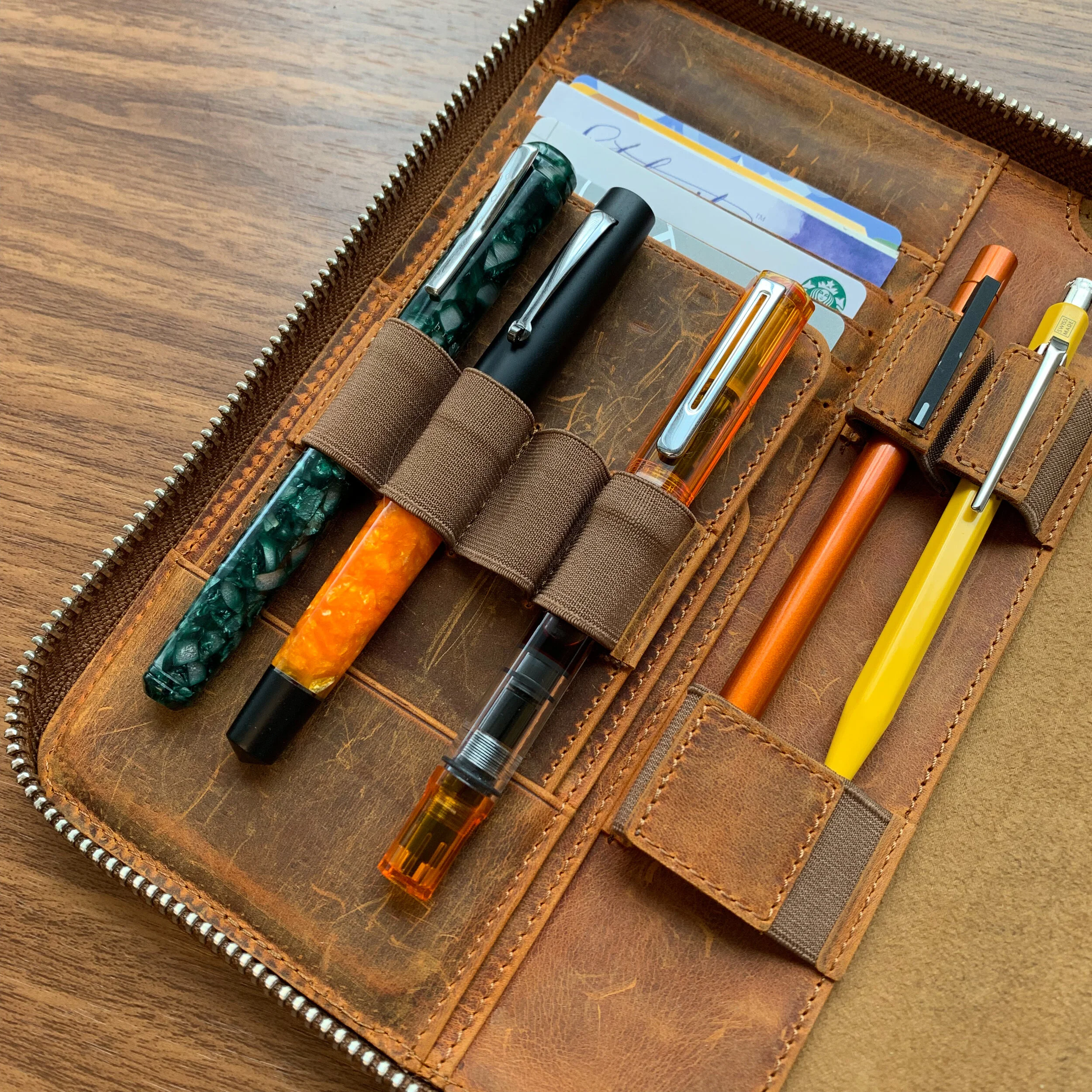
When I evaluate items purchased or sent to me for review, I focus on a few key points. The first, and to me, the most important, is quality. If something is a poorly made piece of junk barely capable of putting ink on the page, I don’t care what it looks like, how little it costs, or how easily replaceable it is - I won’t recommend that anyone purchase the product. The second point is practicality. I use my pens, so in the context of reviewing I consider the pen’s functionality as a daily writer. Did I need to adjust the nib out of the box? Does the pen balance well in the hand? Does the cap post to my satisfaction? Is the pen so comfortable to use unposted that I don’t care? Is ink capacity an issue for longer writing sessions?  The third factor, which I’ll focus on today, is the pen’s overall value proposition. Though the concept of value is highly subjective, and much depends both on the traits and features that one considers important as well as one’s budget/price sensitivity, I’ll assume for purposes of this particular article that the majority of my readers are willing to spend anywhere from $20-$200 on a fountain pen, and share most of my personal preferences in terms of what they look for in a pen. With this in mind, I’ll discuss several pens that I think give you a lot of bang for your buck. 

Value Considerations In a Fountain Pen Purchase

So what do I look for? To me, whether or not a particular fountain pen represents a good or bad value proposition starts with the price point at retail. In today’s market, I consider the baseline price of a high-quality steel-nib fountain pen that will give you years of consistent service without much fuss to be around $135. If a pen I’m reviewing falls around this price point, has a good nib, is comfortable to use, and doesn’t feel inexpensively made or mass-produced, I generally consider that pen to be reasonably priced and a “fair” value. As you would expect, if a pen ticks all those boxes and falls below this $135 mark, it becomes a better “value proposition” (i.e., you get more for your money). Pens that exceed my baseline price point can still be good value propositions, but they need to offer something more that distinguishes them from run-of-the-mill offerings. 

With respect to those much less expensive pens that I consider great value propositions, I feel that I am getting something in terms of the writing experience that one would typically only find in a more expensive pen. For example, an injection-molded plastic TWSBI may not feel as well-made or appear as attractive as a pen from Franklin-Christoph, but it does offer a reliable, smooth piston mechanism with a large ink capacity for less than $70. For that reason, I think TWSBI generally offers excellent value. Similarly, pens by PenBBS and Moonman have exceptionally smooth nibs, and I understand that Moonman nibs are actually hand-tuned at the factory. This is something you don’t usually find on inexpensive pens that can be purchased for under $20.

On much more expensive pens (say $250-plus), I apply the “Lamy 2000 Test.” I can usually purchase a Lamy 2000 - probably my favorite fountain pen on the market - for $200 tops, and typically less. What is there about a more expensive pen that justifies spending the extra money? Is the pen made from an uncommon or special material, like celluloid or a manufacturer-exclusive acrylic? Is the pen a special or limited edition with a theme that holds particular meaning for me? Is the pen hand-turned by a small maker or a collaboration where a portion of the proceeds goes to a cause I care about? Do I love the aesthetics of the pen so much that I simply don’t care about having to shell out the extra money? 

My 2019 Value Recommendations

With these considerations in mind, what fountain pens do I think represent the “best value” in 2019? 

Lamy 2000. It’s hard to beat the Lamy 2000 as a value proposition, especially when you can grab it for less than $150 on sale or by using a coupon code. I won’t go into what I like about this pen as a daily workhorse for the umpteenth time - you can read my “Workhorse Pens” profile here - but for the money you will get a reliable, lightweight piston filler with a 14k gold nib. The way prices are trending these days, a similarly equipped pen from another major brand like Pelikan would run you at least $300. (Purchase Here)

Anything From Franklin Christoph. The main selling point about Franklin-Christoph pens are their nibs, with the unique resins and acrylics coming in a close second. The Franklin-Christoph Model 20 is one of my personal favorites, and it starts at $165 with a standard nib, but you have the option to add a hand-ground S.I.G. (Stub Italic Gradient) nib for $20, or a Mike Masuyama specialty grind for $25. (Prices are for steel nibs; gold nibs cost extra.) The ability to add a customized stub or italic nib to an already exceptional fountain pen, and still come out under $200, equals huge value in my book. (Purchase Here)

Leonardo Momento Zero. One of my favorite new brands is Leonardo Officina Italiana, and I am a huge fan of their Momento Zero fountain pen. The base model is a hand-turned acrylic pen with a stainless steel nib - on paper, nothing special - but Leonardo offers unique materials that I think have the look and feel of vintage celluloid, with the pens starting at $169 retail and often ending up priced even lower. That represents outstanding value for such a high-quality handmade pen. My one very high-end purchase this year was one of the Momento Zero “Maestro” sets, which gave me very little hesitation since pens made from those specific Italian celluloids are retailing for much more than the Leonardo set when considered on a per-pen basis. (Purchase Here)

TWSBI ECO. For those looking to break into the world of bottled ink without spending a lot of money, it’s hard to do better than the TWSBI ECO. Retailing at around $30 or less, you get a well-made pen with a good steel nib, large ink capacity, and a reliable piston. TWSBI also has started to release the ECO in a range of transparent colors, making it a fun and inexpensive series of pens to collect, if that’s your thing. Honestly, if I had to, I could make do with a TWSBI ECO as my sole daily driver. (Purchase Here)

PenBBS 308. At the sub-$20 level, you have PenBBS, which I’ve found to be one of the more fun and reliable inexpensive brands. While I don’t have enough experience with their more sophisticated filling systems (vacuum, syringe, and piston fillers) to make a long-term judgment on their durability, the cartridge-converter PenBBS 308 can be found for less than $20, and comes in a range of unique, colorful materials that I’ve never seen at this price point. I also really enjoy the slightly upturned nib, which I’ve consistently found to be a smooth writer. (Purchase Here)

Pilot Pens in General: The Pilot Custom 74, the Pilot Custom Heritage, and the Pilot Vanishing Point will all net you a pen with a gold nib for $200 or less. (The Custom Heritage runs around $220 but 10% discount codes are fairly easy to come by.) Though the Vanishing Point and its slightly smaller sibling, the Decimo, have their fans and detractors due to the placement of the clip, which can interfere with grip depending on how you hold the pen, the Custom 74 (cartridge-converter) and Custom Heritage (piston filler) are standard-shaped pens that most can use quite comfortably. In my opinion, they are also both highly underrated and don’t receive nearly the amount of attention they should. (Purchase Here)

This isn’t intended to be a sophisticated economic analysis of the fountain pen market, just a general discussion of what I consider when offering my opinion on whether specific pens represent “good value” or, on the other hand, are overpriced. Different people will have different considerations, but I thought it might be helpful to my readers to lift the veil a bit on what I consider in the course of my reviews. Feel free to reach out or comment if you have any further questions.

Disclaimer: This post contains links to paid sponsors and affiliates.
In Editorial Tags Editorial, Value, Top 5
3 Comments

Pen Review: Jacques Herbin "Sloop" Fountain Pen

October 24, 2019

Last year, Herbin, one of the oldest ink manufacturers in the world, announced that it would launch a set of high-end fountain pens under the new moniker “Jacques Herbin.” When the designs were revealed, it’s safe to say that people were … underwhelmed. I’ve yet to read a review of these pens, and I’ve not seen them sold at retail in the U.S. Our sponsor Appelboom, which is located in the Netherlands, kindly agreed to lend me one of the dark blue “Sloop” fountain pens with brushed steel trim. My conclusions? The Jacques Herbin Sloop would make a nice everyday writer, similar to some of the more basic models by Waterman or Montegrappa. The problem here, as is common with companies trying to break into the fountain pen market at the “luxury” level, is the high price point.

I truly enjoyed several aspects of the Jacques Herbin Sloop. While I didn’t subject this pen to the true rigors of my daily carry, since I received this pen on loan, I spent enough time with it to offer some general observations.

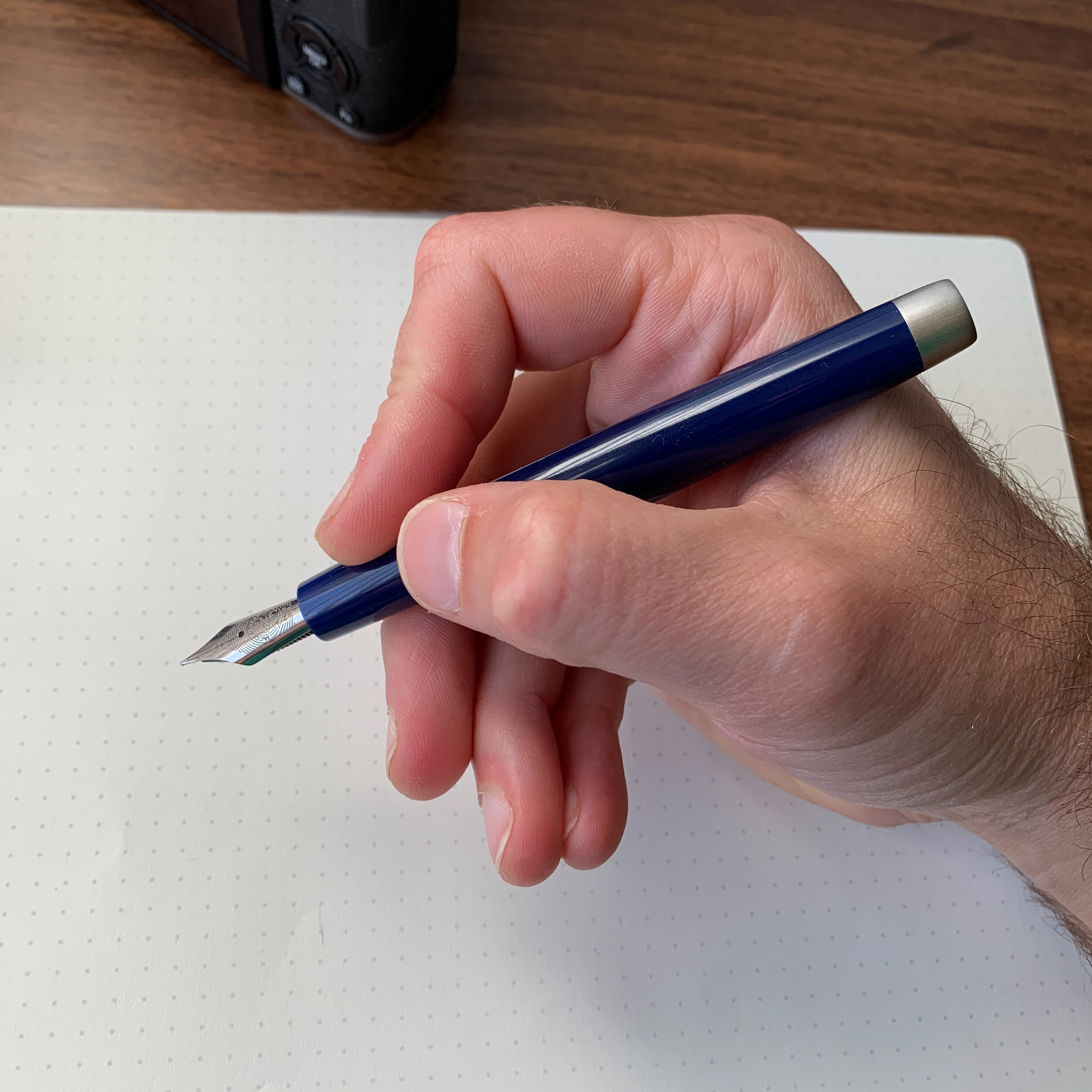
A comfortable section, with the threads placed high so as not to interfere with your grip. Perfect for longer writing sessions!

Pros:

  • Overall Design. The Sloop features a classic, understated, vintage-style design (which you would expect from Herbin). I would characterize this pen as a streamlined flat-top, accented by brushed metal trim on the cap band, clip, and two finials. The acrylic section is on the longer side, and despite the fact that the pen has metal threads, they sit high up and shouldn’t interfere with most people’s grip.

  • Brushed Metal Trim. More companies should offer brushed metal trim. It adds interesting detail to an otherwise basic acrylic design. I could have done without the “Jacques Herbin Paris 1670” engraving around the cap finial, since something about it looks slightly “off” when set against the brushed metal. It may be that Herbin simply tried to include too much text in a small area, and the brushed metal leaves the edges looking fuzzy. 

  • Well-tuned Bock Nib. The stainless steel Bock nib on the Sloop was a good one: well-tuned and moderately wet. I also liked the fact that Herbin went with a custom engraving and didn’t offer just a stock nib. If a company plans to ask for more than $200 for the pen, customized nibs are really the only option.

The Bock nib on this Jacques Herbin Sloop wrote extremely well.

Cons: 

  • Price. The single biggest issue with this pen is the price point Herbin has chosen to pursue. The Sloop is currently priced at around $240, placing this pen at a more expensive price point than brands such as Franklin-Christoph, Leonardo Officina Italiana, and introductory level Montegrappas like the Elmo and Fortuna.  

  • Insubstantial Feel in the Hand. The material feels thin, and different from the resin or acrylic used by Montblanc, Franklin-Christoph, or even PenBBS. That’s not to say the pen is poorly made or fragile - I’m sure it will hold up fine - it just doesn’t feel as you would expect from a pen at this price point. 

  • Postability. Since the Sloop is a relatively slender pen, I found myself wanting to post it, but the cap doesn’t post deeply enough for a comfortable writing experience. The feel of this pen is very much like the Karas Kustoms Decograph: as noted above, I enjoy the vintage-style design, and the section is quite comfortable, but like the Decograph, it’s a bit long and awkward posted. 

While I like the brushed trim on this fountain pen, I’m not sure that this particular engraving design/technique works….

View fullsize Jacques Herbin Sloop Unposted
View fullsize Jacques Herbin Sloop Posted

Takeaways and Where to Buy

It’s always interesting to see companies branch out from their traditional product lines in an effort to expand their brand’s reach. Previously, Herbin has confined it’s pen offerings to lower-cost dip pens, inexpensive fountain pens, and refillable rollerballs. While my overall impression of Herbin’s first foray into the high-end pen market is generally positive, and I certainly like the look they are going for, I think Herbin will have a hard time being successful unless they move these pens into the $150-200 price range. While nice, the overall design isn’t particularly distinctive or inspired enough to warrant charging more than, say, a Montegrappa Fortuna - a pen that is already pushing the upper limits of what consumers would be willing to pay for a cartridge-converter fountain pen with a stainless steel nib. 

The pen featured in this review was generously loaned to me by Appelboom, a sponsor of this blog. The Jacques Herbin Sloop is currently priced at $240 US (subject to change along with the exchange rate), and comes available in Black, Amber, and Taupe, in addition to the Dark Blue model pictured here.   Appelboom carries the full range of Jacques Herbin fountain pens, Herbin inks, and dozens of other brands. 

Disclaimer: This post contains affiliate links. Should you elect to purchase a pen from Appelboom, I will receive a small commission which I use to keep this blog running. Many thanks to Appelboom and all my readers for your support!

In Pens Tags Jacques Herbin, Jacques Herbin Sloop, Pen Review
Comment

Pen Review: Montegrappa Extra 1930

October 19, 2019

Montegrappa has changed its lineup over the years fairly frequently, but the Extra 1930 - which one could comfortably describe as the brand’s “flagship” offering - has remained a constant. The current Extra 1930 is “inspired by a model born over 80 years ago,” and “designed for people who love classic design, original colors and decorations” in line with Montegrappa’s traditional “aesthetic approach.” If you’re a fan of vintage-inspired pen design, like me, then you’ve probably had your eye on one, even if the price point gives you some initial pause.      

The Montegrappa Extra 1930 is one of those pens that I always thought would be forever out of my grasp. (Then again, when I first got into fountain pens I also thought a $300 Sailor would remain well out of my comfort zone, but we all know how that story ends up.)

The sterling silver medallion on top of the cap will develop a patina as it ages. You could polish it, and I might eventually, but I like the “antiqued” look.

The Extra 1930 traditionally comes in three different materials, all celluloid: Turtle Brown (shown here); Bamboo Black, and Black & White. Montegrappa also recently added Red and Mediterranean Blue to the lineup, though it’s unclear whether these are temporary or permanent additions. Of the available options, the traditional three are my favorites. Montegrappa accents the celluloid with sterling silver, engraved with what they describe as a “Greek Fret” design on the cap band. A similar pattern adorns the large (No. 8) 18k gold nib, which is paired with an ebonite feed that provides plenty of ink flow. (Note: if you write small, opt for an EF nib, and even then you may have to grind it down. It’s a wet writer.)

That 18k No. 8 nib is gorgeous to look at and a pleasure to write with. It’s not springy, like some larger nibs, and actually quite stiff, but at the same time extremely smooth and an excellent daily writer. The sterling silver section is NOT slippery, and the threads are soft, not sharp. I can write for hours with this pen.

In my opinion, the Montegrappa Extra 1930 offers one of the best high-end writing experiences on the market. What do I mean by that? Sometimes, super-expensive pens are more “art” than “writing instrument.” I don’t purchase pens that I don’t use, so a key point for me in evaluating a specific pen is how comfortable and functional it is to use every day. I go back and forth on whether the Montegrappa Extra 1930 or the Montblanc 146 is my favorite “luxury” fountain pen sold today - they’re both pleasant to write with and superb daily writers. On the Extra 1930, the sterling silver section front-weights the pen and counteracts the weight of the piston, balancing the pen nicely for longer sessions. It’s one of the few pens that I don’t post.   

I have no regrets about splurging on the Extra 1930. My own personal “collection” focuses heavily on vintage-inspired modern pens, with a particular emphasis on Italian celluloid. Celluloid pens cannot be acquired inexpensively, since making celluloid is a difficult and time-intensive process, and the material itself has become scarce. Since pen companies OMAS and Delta folded a few years ago, the number of new celluloid pens on the market has dwindled, and even those being released by companies such as Leonardo Officina Italiana and ASC Pens (the “successor” company to OMAS) are using residual celluloid rod stock, which eventually will be gone. Montegrappa appears to be one of the only companies still releasing celluloid pens in proprietary patterns that they developed themselves.     

Takeaways and Where to Buy

I love my Extra 1930 - it’s beautiful, and sure it’s expensive, but it’s a writer’s pen with exceptional balance. My one quibble is with the ink capacity. A pen of this size should hold more than .8mm or so of ink, especially one with an ebonite feed. If you opt for a wider nib, you’ll be refilling often. 

Despite what I consider to be the generally high quality of their pens, Montegrappa has become known more than anything for their high prices. Unfortunately, the Extra 1930 is no exception, clocking in at a whopping $1,495 MSRP, with the pens actually selling for around $1,100. Is it worth spending this much on a pen? It depends on what you value. In addition to the design, much of the cost here lies in the premium materials used (celluloid, all that sterling silver, and that massive 18kt nib). Looking at comparable pens on the market (ASC Pens Bologna Extra, a Sailor Bespoke King of Pen, Aurora Internazionale), it’s hard to say that Montegrappa’s ask here is out of line with what other companies are charging, but it’s still at or near the top of the market. Because Montegrappa sells a ton of pens at this price point, I don’t expect prices to come down anytime soon.     

I purchased my Montegrappa Extra 1930 from Dan Smith at The Nibsmith. One of the great things about purchasing pens from Dan is that, in addition to carrying the full range of Montegrappa pens, he offers nib work on any pens he sells, and on a pen at this price point, any tuning or grind is complimentary. That’s right - you will be paying a LOT for an Extra 1930, but if you purchase from Dan that includes any planned nibwork. Note that Dan is currently running a special on the Black & White Extra 1930, at a price you won’t see very often! .  

Disclaimer: I purchased the pen featured in this review with my own funds, at full retail, for my own use. The Nibsmith is a paid sponsor of this blog.

In Pens Tags Montegrappa Extra 1930, Montegrappa, Fountain Pen, Pen Review
2 Comments

Pen Review: PenBBS 309 Piston Filler

October 16, 2019

I’m close to finishing up the reviews from my most recent round of PenBBS purchases, and I have to admit that this one was a bit of a letdown. After being absolutely blown away by certain other models - particularly the Model 308 and the Model 456 - the Model 309 piston filler didn’t deliver. While the signature PenBBS nib still offers an excellent writing experience out of the box, the piston sticks and generally feels cheaply made and unreliable.  

Let’s start with the positives: Like every other PenBBS pen I’ve used, the presentation, fit, and finish on the Model 309 far outstrip any other pen I’ve purchased for $23. This pen looks amazing, with a classic streamlined shape and “peaked” ends. It doesn’t break any new ground from a design standpoint, but with this type of standard piston filler, not many pens do. The closest comparable would be the Leonardo Momento Zero, with the PenBBS Model 309 slightly slimmer and longer. 

Seriously, you would expect a pen at this price point to ship in a cardboard sleeve, or maybe a plastic tube. PenBBS boxes are well-designed and, best of all, recyclable. Where possible, I’ve started recycling pen boxes if I can in an effort to reduce clutter around my house.

Though I had some issues with the plastic piston mechanism - discussed further below - it reduces the weight of the pen. While those with smaller-sized hands might find the PenBBS 309 slightly long to use unposted, I had no such issues given how light this pen is. The Model 309 posts securely, and slightly deeper than my Leonardos.  

View fullsize PenBBS Model 309 Unosted
View fullsize PenBBS Model 309 Posted

I understand that PenBBS is attempting to engineer sophisticated fountain pen filling systems in a way that makes them inexpensive to produce. That’s admirable, and likely the driving factor in why PenBBS is able to sell at their current price point. This piston design on the Model 309, however, falls flat. I had trouble filling the pen because the piston kept sticking to the sides of the barrel, and moving the blind cap actually caused it to disengage from the main piston rod, disassembling the mechanism itself. I was able to get things working again by pushing and pulling to “unstick” the piston, but this shouldn’t happen straight out of the box. Eventually I’ll disassemble the pen and apply some lubricant to the piston to see if that helps. I’m not the only one who’s experienced this problem, and plenty of people have posted fixes online. (Just Google “PenBBS 309 stuck piston.”) PenBBS should take a page from TWSBI and re-engineer the piston on the Model 309 to resolve the issue. If TWSBI can figure out how to incorporate a reliable piston into the TWSBI Eco, PenBBS can as well, even if it means charging a few dollars more. 

Piston issues notwithstanding, the nib on the Model 309 still offers the same great PenBBS writing experience.

Takeaways and Where to Buy

I’ve reviewed several PenBBS pens over the past few months, and while I have enjoyed the Model 308 (cartridge-converter), the Model 456 (vacuum-filler), and the Model 469 (double-ended eyedropper), I’m hesitant to recommend the Model 309 (piston filler) or the Model 355 (syringe-filler/”bulkfiller”) unless people go into the purchase with their eyes wide open as to the potential issues. I just can’t get past the fact that the filling mechanisms on these two pens feel a bit janky and give me doubts about long-term reliability. If I can get a TWSBI Eco with a reliable piston for the same price point, the only reason I wouldn’t do that would be to pick up a pen in one of the unique PenBBS materials. (Majusaka Red, anyone?) 

A comparison shot of the various PenBBS Models, from left: Model 309 in Mojito, Model 308 in Manjusaka Red, Model 308 in limited edition “Niangao is a Cat” acrylic, Model 469 in Manjusaka, and a clear transparent Model 456 vacuum-filler.

That said, I firmly believe that the unique acrylics and materials, at this price point, are driving PenBBS sales. If I can get a transparent colored demonstrator that writes this well for $23, maybe I am willing to put up with a slightly janky piston rather than shell out hundreds of dollars - not to mention deal with complex shipping logistics - for a Japan-only Sailor exclusive in a similar color. Apparently, many people are deciding that this tradeoff is worth it, and PenBBS could be positioning themselves for success in the event of a recession or other event where disposable income gets tight.

 You can purchase the PenBBS 309 piston filler directly from the PenBBS Etsy shop, with prices ranging from $22.99 to $29.99. The transparent green “Mojito” pen pictured here is one of the lower priced offerings, at $22.99.

Disclaimer: This post contains affiliate links. I purchased the pen featured in this post with my own funds, for my own collection.

In Pens Tags Fountain Pen, PenBBS 309, Chinese Pens, Pen Review
1 Comment

Best Fountain Pen Inks for Everyday Writing: Lamy Inks

October 12, 2019

With so many different brands of fountain pen inks literally flooding the market right now, it’s easy to find yourself paralyzed by indecision. If you’re just starting out, where do you even begin? I recall feeling baffled by the number of different colors and ink properties in the Noodlers and Private Reserve lines, and I’m not sure what I would have done if I’d had to contend with Robert Oster, KWZ, or Iroshizkuku, not to mention all the various lines of Sailor. That’s why, when someone new to the hobby asks me for my recommendation on a “best first bottle of ink” to buy, I often recommend that they stick to the basics. The blue, black, and blue-black inks manufactured by Waterman, Pelikan, and Lamy will all serve you well.

So let’s talk about Lamy, one of my all-time favorite stationery brands. I’ve written repeatedly about how much I enjoy their flagship fountain pen, the Lamy 2000, to the point where I now have one of every model of that pen made available to the general public (yes, even the overpriced Bauhaus 100th Anniversary model and the much-maligned “Black Amber”). Lamy doesn’t experiment much - they typically release a special edition Safari and AL-Star, and maybe a Studio, along with a limited-run ink that matches one of their special edition pens. This perceived lack of creativity causes Lamy a lot of grief in in the '“pen press” and on social media, and their efforts to change and chase trends can come across as ill-conceived and ham-handed, but I wanted to look at the other side of the argument: what if this “slow to change” strategy is one of the reasons Lamy is still around? With Lamy ink, you definitely know what your getting, and its good.

Personally, I find Lamy’s Black and Blue-Black inks to be subtle and interesting standard colors. As you might guess, I added a Black Amber model to my Lamy 2000 collection, and while I understand and agree with a lot of the criticism on how Lamy handled the release, the pen itself is quite nice.

Why Do I Love Waterman and Lamy Inks So Much? Aren’t They Boring?

In short, yes and no. There’s nothing really exciting about Lamy Washable Blue, unless you count the fact that it’s erasable if you use Lamy’s proprietary ink eraser pen. (See note below.) With all the variety available, some people will turn their noses up at anything labeled merely “blue,” “black,” or “blue-black.” What you may not realize, however, is that Lamy Black is actually a rich and interesting black, with subtle variances in tone that make it look dark green in certain lighting, and Lamy Blue-Black is one of those vintage-style blue-blacks with gray undertones. Look, neither of these inks is going to blow up Instagram, but that’s not the point. They work well in most pens, dry relatively quickly, and don’t feather and bleed except on the cheapest of paper. Most notably, Lamy inks are widely available and extremely inexpensive.

Side Note: One neat fact about Lamy’s standard “Washable Blue” fountain pen ink is that you can use Lamy’s “X Eraser Pens” to correct mistakes. I remember seeing these things for the first time when I was attending college in France and thinking they were the coolest stationery item ever made. The white end covers up the fountain pen ink, and you can use the blue end to write over the correction. Be aware that these are only supposed to work with standard Lamy blue ink, and no other colors.

What’s NOT boring is Lamy’s ink bottle. Not only does it incorporate an “inkwell” design with a slight depression in the center to help fill your pen when ink levels get low, but each bottle also comes with a roll of blotting paper to help you clean the nib section after filling. The blotting paper works extremely well, and you don’t need to use that much, so the paper may even last you the life of the bottle.

The inkwell portion of the bottle pops out so that you can access the blotting paper. Notice the depression in the center of the bottle, so that when you’re running low on ink, you can get those last bits and not waste any!

What About the New Lamy Crystal Inks?

This year Lamy released a series of new gemstone-themed inks in smaller 30ml bottles, dubbed “Lamy Crystal.” I have a handful of these inks, and I’m still in the process of working my way through them. My initial impression, however, is that they don’t behave the same as standard Lamy inks. The Lamy Crystal inks are more saturated, which makes the colors pop, but at the price of the consistency I’ve come to expect from Lamy. Certain Lamy Crystal inks tend to feather and bleed, and are slower to dry. While I need to do more testing before I make a general pronouncement, as it stands now I think I prefer the properties of Lamy’s standard lineup.

Takeaways and Where to Buy

Along with Waterman, Lamy makes some of the best inexpensive “no fuss” fountain pen inks you can put in a pen. Standard Lamy Black and Lamy Blue-Black are two standbys that I regularly use, particularly in my Lamy 2000s, and I highly recommend them to both new users anxious to enter the world of bottled inks, as well as those who write a lot on a daily basis and are looking for a reliable standby. To me, the functionality built into the bottle itself is representative of what I’ve come to expect from Lamy as a brand, and why I keep coming back to their products.

As I mentioned, Lamy ink is extremely inexpensive, with retail pricing as low as $10.50 per bottle. We now carry it directly in the T.G.S. Curated Shop (as of 2022). There’s something to be said for being able to easily acquire the entire range of colors for less than $100!

In Ink Reviews Tags Ink Review, Lamy Inks, Lamy
1 Comment
← Newer Posts Older Posts →
Store Hours and Events
Shop T.G.S. Online
Updated 2026 "Best Pens" Guide
No results found
On The Paper Trail: Live In Nashville Event Tickets Now Available!
TGS_25 Roterfaden Restock Notification
Hierarchies of Fountain Pen Friendly Paper

Join Our Patreon!
Subscribe to the TGS E-mail List

Featured Posts

Featured
Everyday-Stationery-Bags
July 25, 2026
What's the Best Everyday Stationery Bag? My Own Considerations and 5 Options for Pen Show Season
July 25, 2026
Read more →
July 25, 2026
Graphilo-Kobeha-Paper.jpg
July 11, 2026
Paper Review: Graphilo by Kobeha
July 11, 2026
Read more →
July 11, 2026
Pilot-Custom-Heritage-92.jpg
June 6, 2026
Workhorse Pens: Pilot Custom Heritage 92 Fountain Pen
June 6, 2026
Read more →
June 6, 2026
The Gentleman Stationer RSS

View Cart

© Digital Divide Media, LLC, 2014-present.

All content is the exclusive property of Digital Divide Media, LLC, d/b/a The Gentleman Stationer, including “The Gentleman Stationer” website and trademark, and should not be reproduced without express written permission.  All rights reserved.

All content containing paid advertising, affiliate links, or sponsored content will be plainly disclosed by a disclaimer when/if featured.

Contact Information

Website Terms and Conditions

Store Shipping Policy and Return Policy

Privacy Policy and Cookie Policy

Accessibility Statement

Powered by Squarespace