• Blog
  • Shop
  • Podcast
  • Resources
  • Archive
  • FAQ
  • About
  • Contact
  • Sign In My Account
Menu

The Gentleman Stationer

  • Blog
  • Shop
  • Podcast
  • Resources
  • Archive
  • FAQ
  • About
  • Contact
  • Sign In My Account
Platinum-Curidas-Converter.jpeg

Filling Systems: Pros and Cons of Piston Fillers, Vacuum Fillers, and Cartridge/Converter Fountain Pens

May 8, 2021

Vintage vs. modern, steel nib vs. gold nib, extra-fine vs. triple-broad, Safari vs. Al-Star: the fountain pen community has always had - and always will have - various “debates” over what’s better. Of course there’s no right answer, but endlessly discussing the minutiae is part of what makes this hobby interesting, and the community so much fun. (Well, 99% of the community, setting aside the 1% that tends to take everything far too seriously.)

When it comes to my own personal collecting, my interests focus on two areas: materials (mainly celluloid) and filling systems. Acquiring pens made from rare and/or vintage celluloids, which have a depth and warmth that modern acrylics and resins lack, caters to the aesthetic/artistic interest I have in pens. On the other hand, exploring different filling systems brings out the true pen nerd in me, and is probably the reason I have an ever-expanding, wildly diverse accumulation of fountain pens. When manufacturers keep experimenting with new methods to fill fountain pens, you can’t help but try them all!
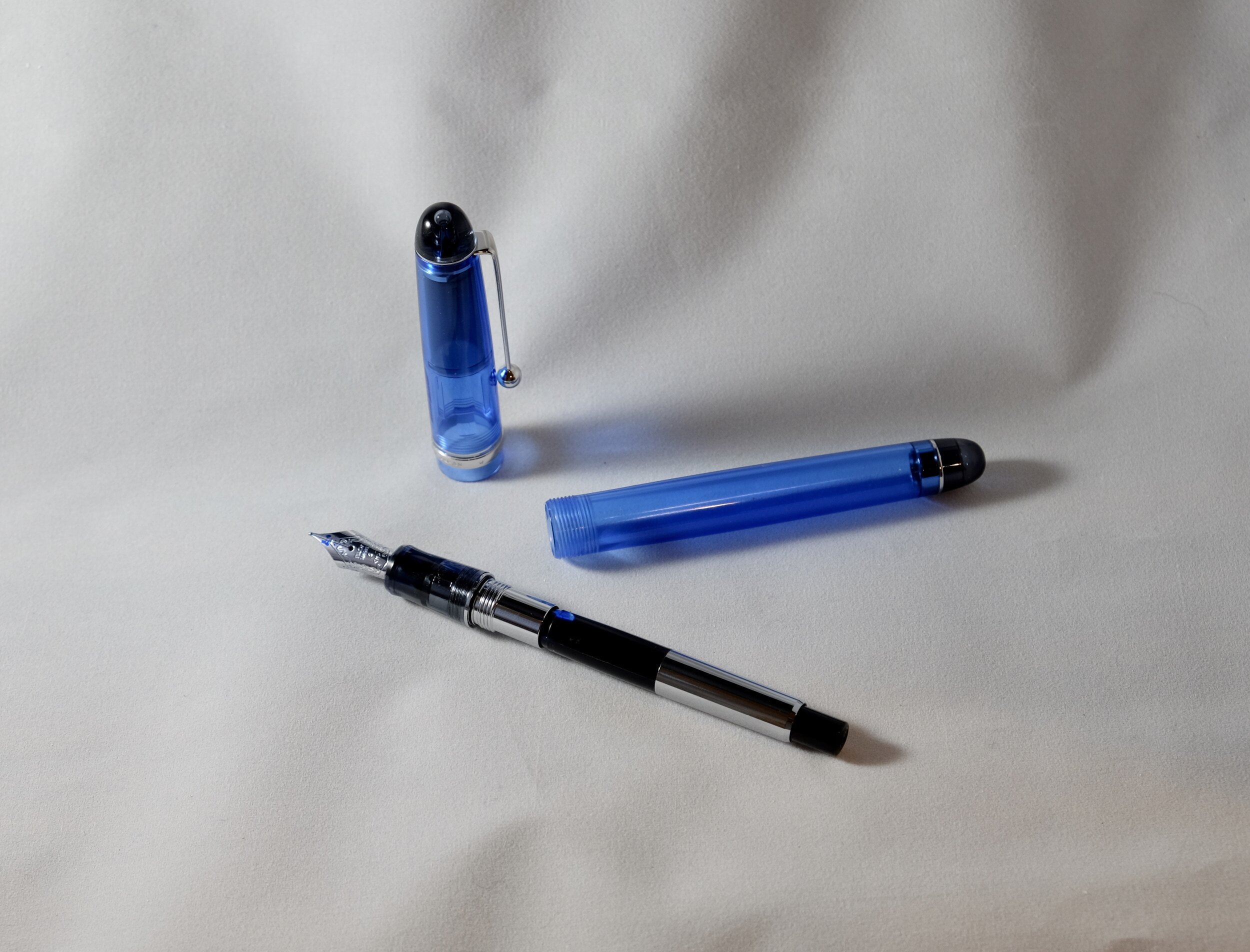
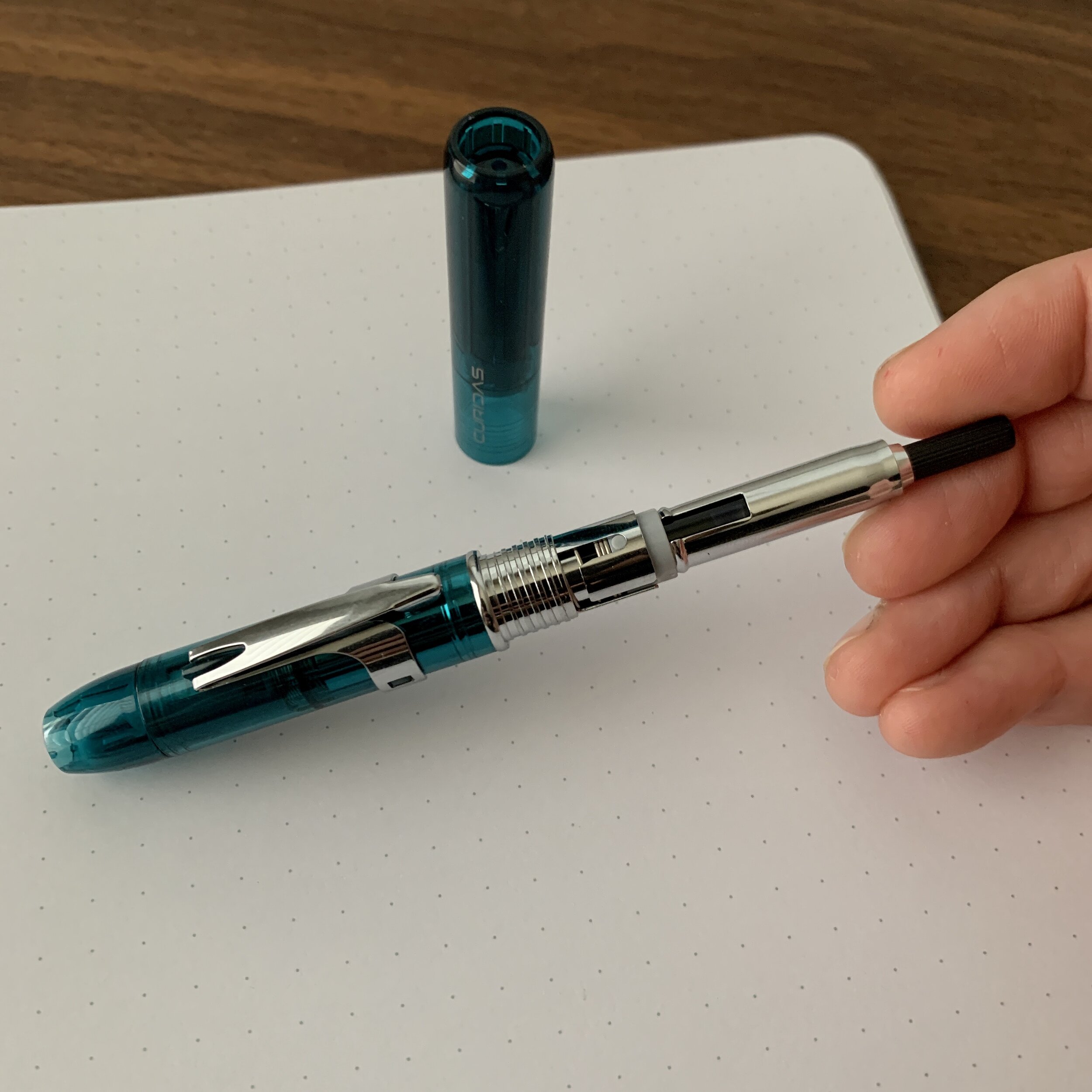
The Pilot Custom 74 fountain pen, featuring Pilot’s proprietary Con-70 Converter. While I love this particular converter, Japanese companies such as Pilot and Platinum (shown at the top) all use their own converter design, so you will need to buy separate converters fore each brand of pen.

The Pilot Custom 74 fountain pen, featuring Pilot’s proprietary Con-70 Converter. While I love this particular converter, Japanese companies such as Pilot and Platinum (shown at the top) all use their own converter design, so you will need to buy separate converters fore each brand of pen.

Cartridge-Converter: The Best Filling System for Most People

People often ask me, what’s the best filling system for the everyday user? For the casual enthusiast, this answer is clear: Cartridge/converter offers a user-friendly, versatile mechanism that’s straightforward and especially appropriate for first-timers and those who travel a lot or otherwise need to be able to refill on the go. I enjoy many cartridge/converter fountain pens myself, and I certainly won’t pass on a pen that I otherwise find interesting or attractive simply because it’s not exclusively bottle-fill. Pros and cons of cartridge-converter filling systems include:

Pros:

  • Versatility. Cartridge/converter filling systems allow you to use ink cartridges and fill from an ink bottle. It’s not just about whether you’re a beginner - I’ve been in this hobby a decade or more, and still keep cartridge/converter fountain pens in rotation because they’re great for travel. (You can read more on why I like ink cartridges here.)

  • Ease of use. If you’re new to fountain pens and simply want to get to writing without worrying about making a mess learning to fill from a bottle, just pop in a cartridge and you’re on your way.

  • Easy to Clean. Cartridge/converter pens are also exceptionally easy to clean by flushing them out with an inexpensive bulb syringe, or soaking the nib unit in water or running it through an ultrasonic cleaner. If you enjoy using highly saturated or shimmer inks that might stain or otherwise be hard to clean out of a pen, cartridge/converter pens are typically the way to go.

Cons:

  • Small Ink Capacity. Both cartridges and converters generally hold less than 1ml of ink. On a busy day, I can easily write one or more cartridge/converter pens dry. If you enjoy changing inks frequently, you might view this as a “pro,” but high-volume writers looking to go a full day or more on a single fill might prefer something with a bigger ink capacity.

  • Proprietary Cartridges and Converters. While some pen companies have moved towards a universal, standard international converter that is freely interchangeable between different pens, many major brands (including Pilot, Platinum, Sailor, Lamy, and Parker, just to name a few) use proprietary cartridges and converters that only work in their pens. To add insult to injury, many pens don’t actually ship with a converter, so it creates an added expense when you can’t use one of the dozens of converters already in your desk drawer.

  • Limited Ink Selection. If you stick to cartridges, you won’t have as many ink options. Don’t get me wrong, you’ll still have plenty, as brands like Diamine, Herbin, Sailor, and Caran d’Ache release more of their ink lines in cartridge form, but you’ll likely be excluded from most of the boutique and specialty inks unless you buy the converter and fill from a bottle.
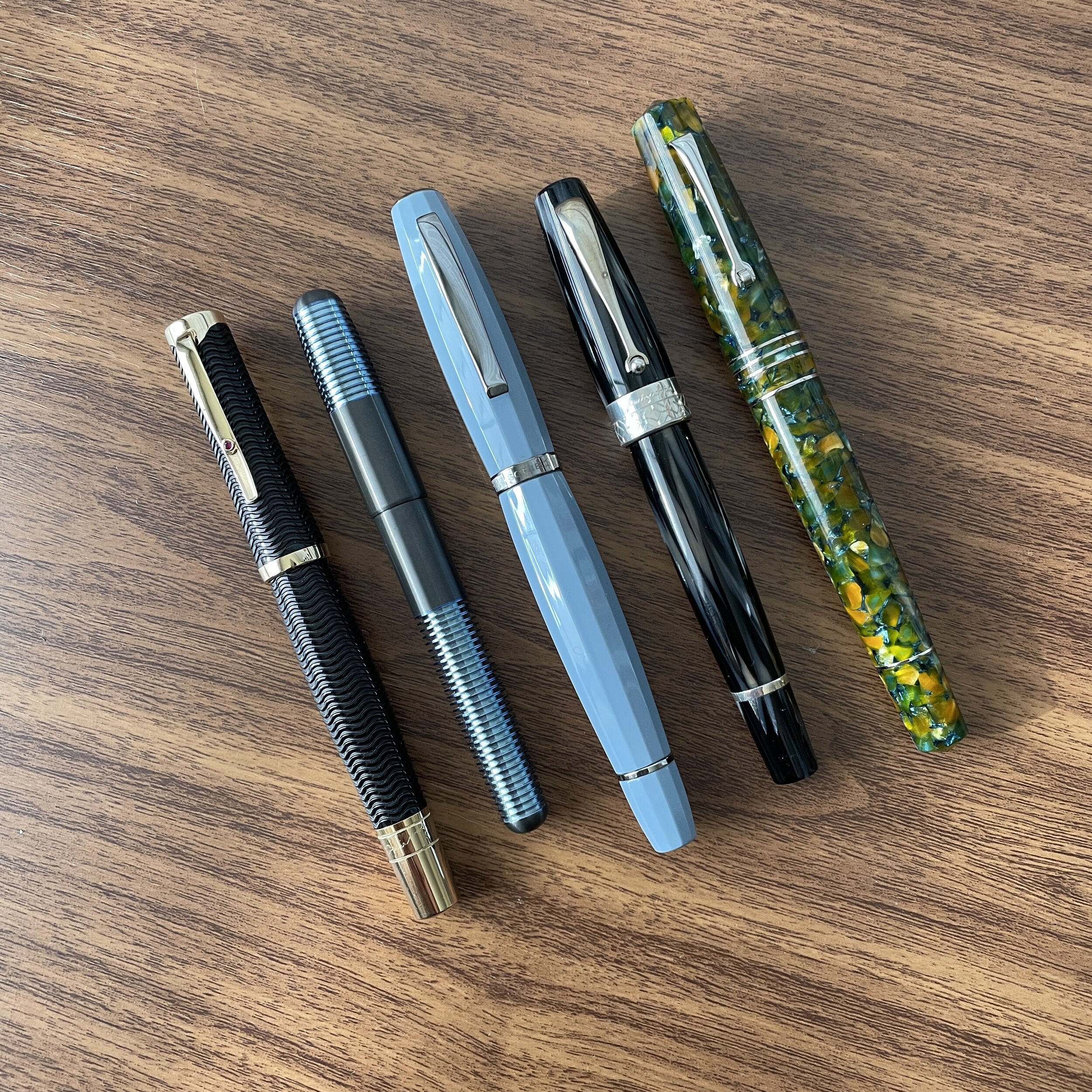
Many piston filling fountain pens are larger, to maximize ink capacity. The smaller pens, second from left and second from right, are cartridge converter, and the rest are piston-fill.

Many piston filling fountain pens are larger, to maximize ink capacity. The smaller pens, second from left and second from right, are cartridge converter, and the rest are piston-fill.

Piston Fillers and Vacuum Fillers Are More Fun

Even though I’m not a true filling-system snob, and frankly the majority of the pens I use on a daily basis are still cartridge-converter, I get the most enjoyment out of my piston and vacuum fillers. For those who may be new to fountain pens and unfamiliar with the terminology, a piston filler uses, well, a piston mechanism to draw ink into the pen when you dip the nib into an ink bottle and rotate the piston knob. A vacuum filler, such as the Pilot Custom 823 or TWSBI Vac 700R, takes in ink when you submerge the nib-end of the pen in an ink bottle and depress a plunger to create negative pressure. Both types of pens hold more ink than your typical cartridge/converter pen because the entire pen body becomes an ink reservoir, as opposed to a smaller plastic tube (i.e., a cartridge or converter) inside the barrel. In my opinion, this increased ink capacity is the primary benefit.
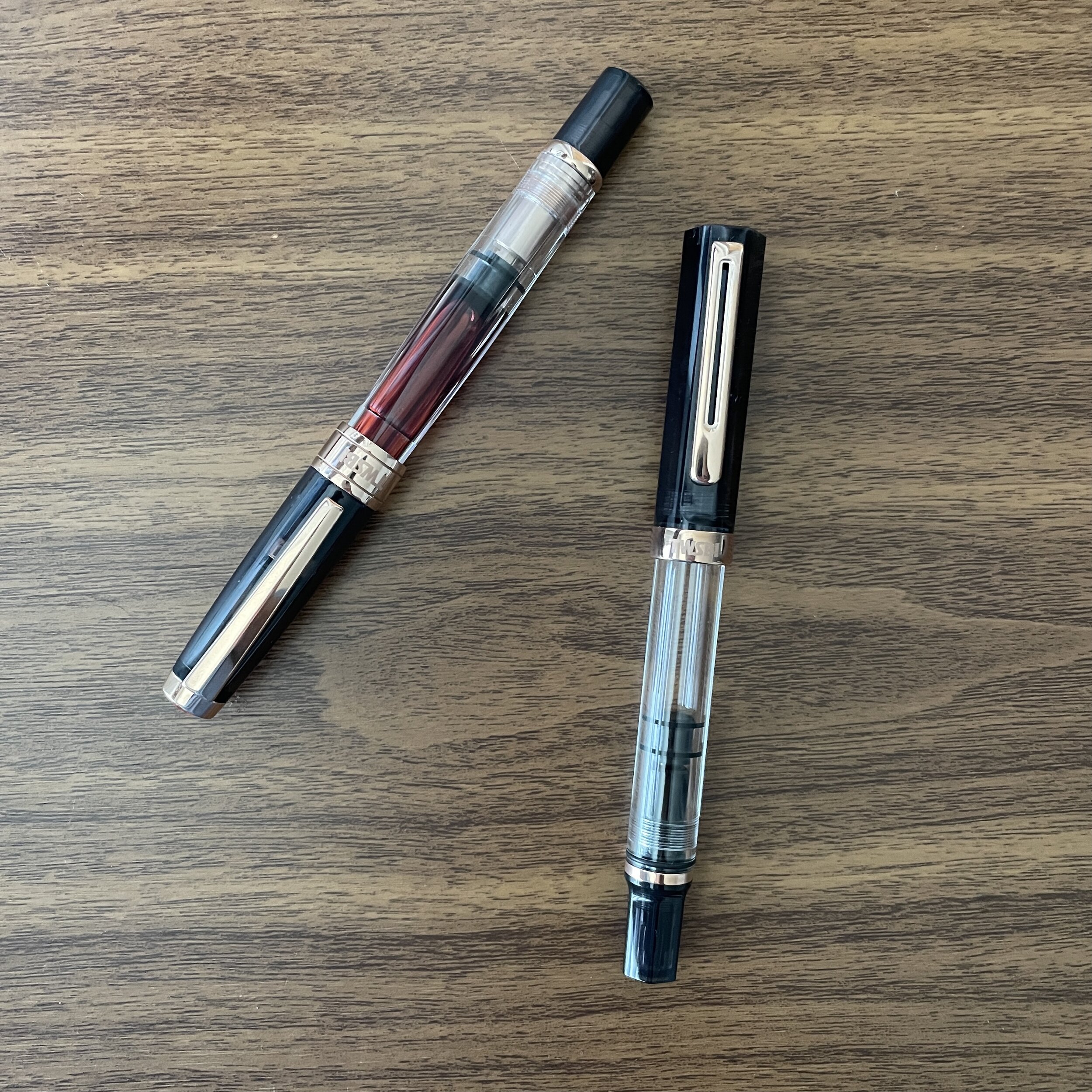
But piston fillers don’t need to be expensive. TWSBI makes a wide range of piston filling fountain pens for as little as $32.

But piston fillers don’t need to be expensive. TWSBI makes a wide range of piston filling fountain pens for as little as $32.

That said, another huge part of why I love writing with a fountain pen is a sense of not just nostalgia but continuity - there’s something inspiring and even motivating about filling a pen and writing the same way that people did nearly a hundred years ago. For this reason, after cartridge/converter, piston fillers are probably the second most-represented category of fountain pens in my own collection, and what I recommend to most people as a first “upgrade,” followed by the vacuum filler.

Pros:

  • Huge Ink Capacity. Piston fillers and vacuum filler fountain pens can easily hold up to 2ml of ink per fill, and sometimes more. For me, that means I’m good to go for at least two full days of writing. Vacuum filler pens can hold a bit more ink, but as I discuss below, sometimes these are a bit more difficult to fill to capacity.

  • Sustainability/Less Waste. Using a fountain pen that exclusively fills from an ink bottle creates less plastic waste than using a cartridge/converter system. Even if you use the converter, those don’t last forever, as I note above, requiring replacement. If you’re focused on using fountain pens because you like the idea of not contributing to the endless morass of disposable ballpoints, rollerballs, and gel pens clogging landfills, then you may want to take things a step further and forego cartridges and converters.

  • Typically Higher Quality. Because piston and vacuum filling systems take more work to build, as a general matter these filling systems are found in higher-quality pens that may or may not be a pen company’s “flagship” pen. A piston or vacuum filling system is typically built to withstand the test of time, whereas I’ve had converters wear out or break in less than a year. Again, this is a generalization - there are very high quality cartridge-converter pens out there, and some very badly made complex filling systems, but overall I find this accurate.

Cons:

  • Generally More Expensive. With greater complexity and quality often comes greater expense. TWSBI and PenBBS are the two main exceptions to this rule, with TWSBI making both high-quality piston and vacuum fillers for well under $100. While PenBBS makes an exceptional vacuum-filling fountain pen (the No. 456), their pistons leave something to be desired.

  • Only Uses Bottled Ink. If you want to be able to refill one of these pens while you’re traveling, you’ll either have to bring a bottle of ink or a traveling inkwell. That can be an inconvenience for some, myself included, and I often opt for cartridges when I travel, or I make sure to fill one of my larger vacuum filler pens to capacity before I leave.

  • Messier to Fill and More Difficult to Clean. Cartridge/converter pens are easier to clean because you can simply unscrew the nib section and flush water directly through the feed. In a piston or vacuum filler, you basically have to work the piston or plunger mechanism multiple times until the water runs clear, which can take a while. This can be a real pain, especially if you’re changing colors. Moreover, any time you fill the pen from an ink bottle, you have the risk of a spill, which doesn’t exist with a cartridge.

The Pilot Custom 823 is probably my favorite vacuum-filler.

You can see the plunger rod through the transparent barrel. For a demonstration of how to fill a vacuum-filler pen, Matt’s video over at The Pen Habit has a useful demonstration.

Yes, I Know There Are Other Options Out There

Including eyedroppers, pump/vacumatic fillers, aerometric, bulk/syringe fillers, magnet fillers, etc. But other than maybe the Opus 88 Japanese-style eyedropper system (which I very much like), the three filling systems I’ve discussed here are the ones most pen users are likely to encounter on a regular basis, especially those new to the hobby. I may even publish a follow-up post on some of the less common variants, and video demonstrations of how exactly to fill and clean each type of pen.

What are your favorite filling systems, and why? Does anyone stick to just one? I want to hear from you!

This post does not contain affiliate links. The Gentleman Stationer is supported exclusively by subscribers to the T.G.S. Patreon and via purchases from the T.G.S. Curated Shop.

In Editorial Tags Filling Systems, Editorial, Guide, Fountain Pens
12 Comments

Essential Stationery Items: Pentel PD345 Quicker Clicker

May 5, 2021

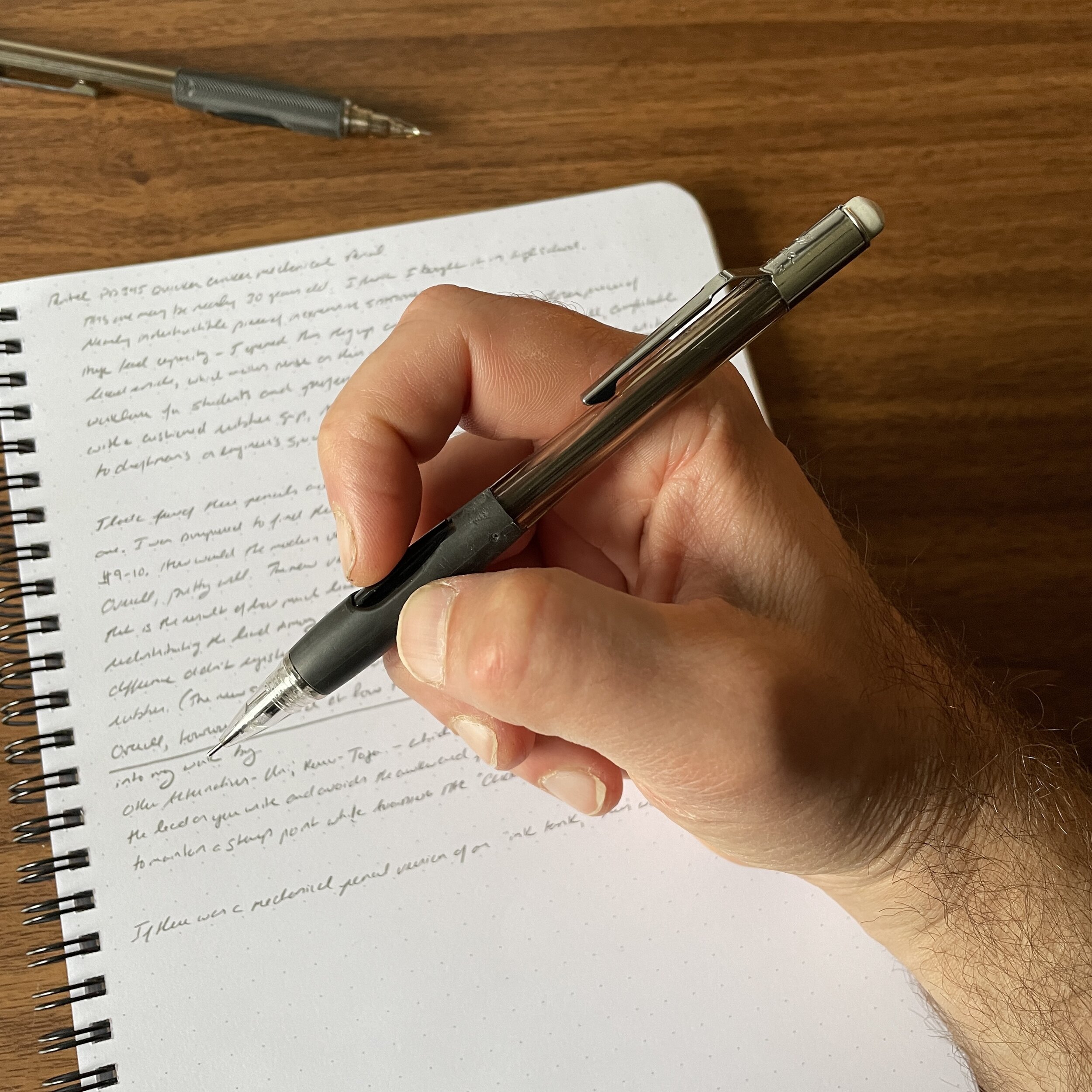
Today I’m reviewing one product in my personal collection that may actually be nearly 30 years old: the Pentel PD345 “Quicker Clicker” mechanical pencil. Those of us who came of age in the early to mid-1990s might remember this mechanical pencil as “the one with the clicker on the side that holds a ton of lead.” I constantly had two or three of these in rotation throughout my middle and high school years, and one of them seems to have survived in the back of a desk drawer. I got curious: Was this pencil still available, and was the modern version as good as the vintage?

My early 1990s-vintage Quicker Clicker (center) alongside two modern versions, which still have their plastic eraser caps. I lost the original cap long ago.

I happily discovered that you can still get the Pentel PD345 today, with the design mostly unchanged. The aspect of this pencil that I always appreciated was that it seems to be made for actual writing, as opposed to drafting or engineering like many knurled metal mechanical pencils. The “Quicker Clicker” features a round barrel with a convex grip section coated in soft rubber. Despite the tendency for the grip to accumulate lint and other backpack detritus, and get kind of grungy over time, this pencil was insanely comfortable to use for long stretches, making it a go-to for test-taking and essay writing. I distinctly recall never having to refill this thing, and true to form, when I pulled the eraser from the original pen nearly a dozen leads fell out the back, all still intact.

Unfortunately the texture on the modern version of the Quicker Clicker probably makes it more likely to accumulate dirt, lint, etc, though it might be fairly easy to clean with compressed air.

If there is one drawback with the Quicker Clicker, it’s that you have to rotate the pencil if you’re interested in keeping a uniform point on the lead, and the placement of the plastic lever on the grip may make this uncomfortable for some people. For that reason, I’m not sure it will ever replace the Uni Kuru-Toga as my go-to inexpensive mechanical pencil recommendation, but hey, some things still get points for nostalgia, and anything that’s managed to hang around in my desk for 25-30 years isn’t going to be replaced altogether.

View fullsize Pentel PD345 Quicker Clicker Grip
View fullsize Pentel PD345 "Clicker" Lever

Takeaways and Where To Buy

Few items have had as much staying power in my collection as the Pentel Quicker Clicker, and at $8 for a pack of two (or $40 for a box of 12?!?), its hard to argue that this mechanical pencil isn’t a great deal. It’s a solid Amazon or big box stationery purchase, and with the enormous lead capacity and comfortable grip, one of the relatively few mechanical pencils on the market actually intended for writing.

I purchased the pencil featured in this review from Amazon, with my own funds, for my own personal use. Last time I checked, you could still find this pencil at Staples, Office Depot, Target, etc., though Amazon seems to have the best pricing, especially if you’re looking to acquire a good, inexpensive mechanical pencil in bulk.

Disclaimer: This post does not contain affiliate links. If you’re interested in helping to support The Gentleman Stationer, consider joining our Patreon or shopping the T.G.S. Curated Shop, our related retail operation. Many thanks!

In Pencil Review Tags Mechanical Pencil, Pencil Review
Comment

Sunday Reading for May 2, 2021

May 2, 2021
  1. Galen Stack and Store Pen Trays: Great if You Come with the Right Expectations (via UK Fountain Pens). Stackable pen trays are a category of storage options that really have been limited to the serious collector. Galen’s new option looks interesting, though the finish seems a bit rough. Like most Galen products, I expect it will improve as they make more.

  2. High Street Fountain Pens for a Fiver (via Dapprman). I must say, this is quite an impressive collection of inexpensive fountain pens that can be purchased in standard office supply stores. Options in the U.S. are much more limited, especially where I am.

  3. Galen Leather Tomoe River Notebook (via Pencilcase Blog). Dries reviews Galen’s leather-bound Tomoe River notebook, which is one of a few ways you can still get your fix of old Tomoe River paper.

  4. What’s in a Name? Featuring the Fountain Pen Revolution Quickdraw (via Penquisition). I’ve never used a pen from Fountain Pen Revolution, but they’ve received much praise in the past from those who like their flexible steel nibs, and now they apparently have a stub.

  5. Custom Paper Sample Pack Updates (via Fountain Pen Love). If you didn’t know, John offers sample packs of fountain pen friendly paper in his shop. He’s recently updated his offerings to include additional varieties.

  6. Pencils!?!?!? (via FP Quest). Curiously, the reason that I enjoy using pencils is because they aren’t fountain pens. Sometimes I find myself getting distracted by whatever pen I’m using, and I just want to write with something different to force myself to refocus.

  7. Colorverse: The Standard Model (via Well-Appointed Desk). I picked one of these up last year, and have yet to make my way through it. I was actually surprised to see that none of the inks inside were glistening, which should make them all highly usable to me. Need to crack it open!

  8. Montblanc Homage to Napoléon Bonaparte Blue Ink (via Gourmet Pens). This looks like a very attractive ink, but it sometimes seems like Montblanc has really focused on standard blues in their special and limited edition ink series.

  9. Some Housekeeping Out of Hanover (via Pelikan’s Perch). I was not planning to pick up one of this year’s M205 releases, but this is an odd development. It will be interesting to see how people react once the actual pens are in-hand.

  10. TRU RED Explore Journal Review (via Pen Addict). Staples.com sent me some samples of TRU RED products for review, and after reading Brad’s write-up I’m intrigued to dive into this particular notebook, especially after my fairly good experience with some of their other products I’ve reviewed.

In Case You Missed It….

This week on the blog, the big news was that I revamped my “Best Pen” Recommendations for 2021. This is the first time in a couple of years that several of the lists saw significant changes, including some new additions to my “Personal Favorites.” I also published Part II of my “Exploring Iroshizuku” series, reviewing Asa-Gao, Murasaki-Shikibu, and Ajisai, the latter two being inks I’ve never really uses much, if at all. Finally, since I’m now an authorized retailer of TWSBI products, I went ahead and swabbed all of the TWSBI Inks, including not only their standard lineup but also the Six Ink Set. This week’s Deals & Drops post featured the new “Honokalani Maile Lei” fountain pen from Kanilea Pen Company, as well as several restock notifications from the Curated Shop and elsewhere.

This Week in the Curated Shop

I recently received a large restock of Midori MD Notebooks and covers, Tombow and Uni Woodcase Pencils, and TWSBI Fountain Pens and Ink. I have exactly one remaining Caran d’Ache Ecridor Racing Pencil, as well as one remaining Klein Blue Léman Fountain Pen (with the limited edition ink). Look for some fun new products to arrive in the coming weeks, which I will list as I receive them!

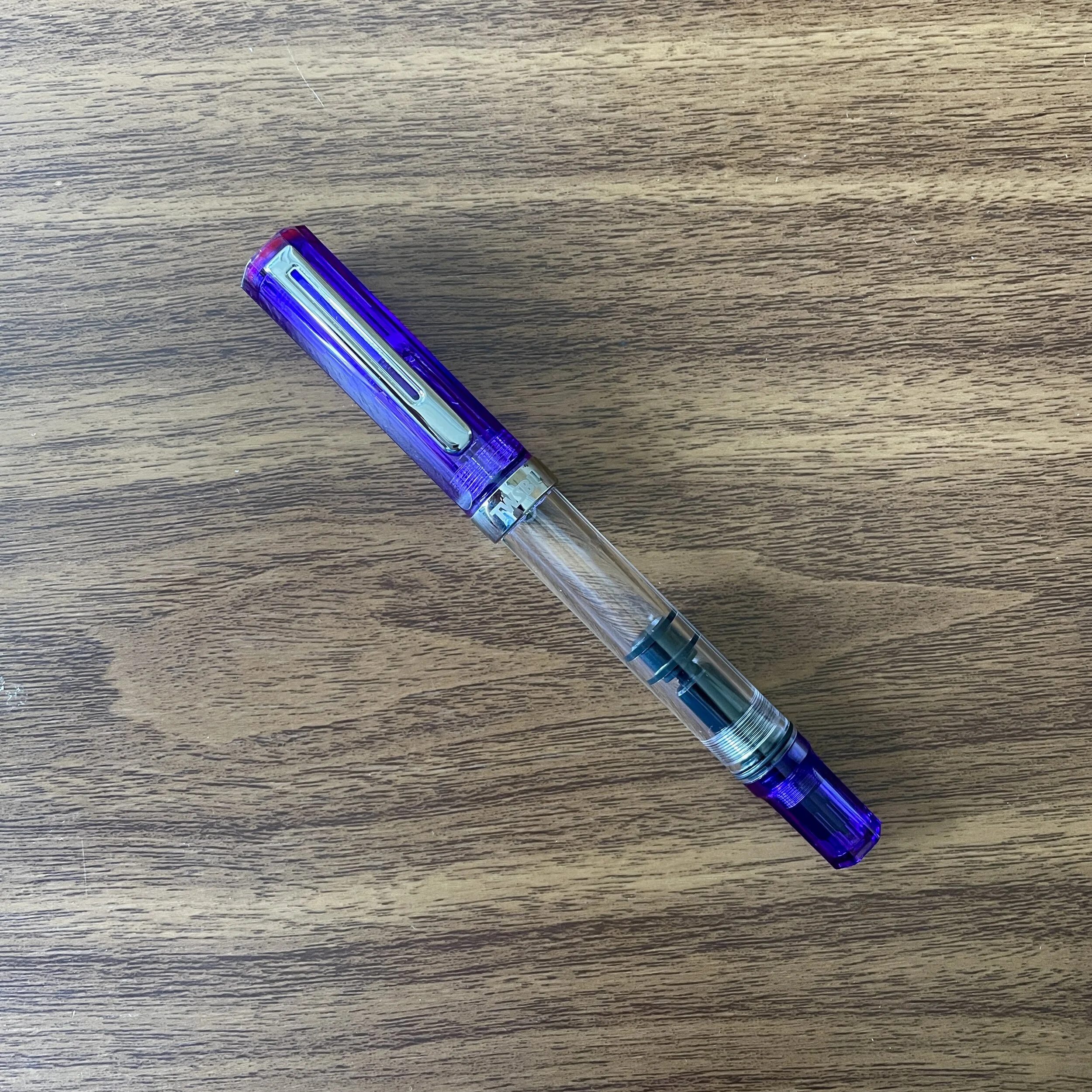
TWSBI Eco
TWSBI Eco
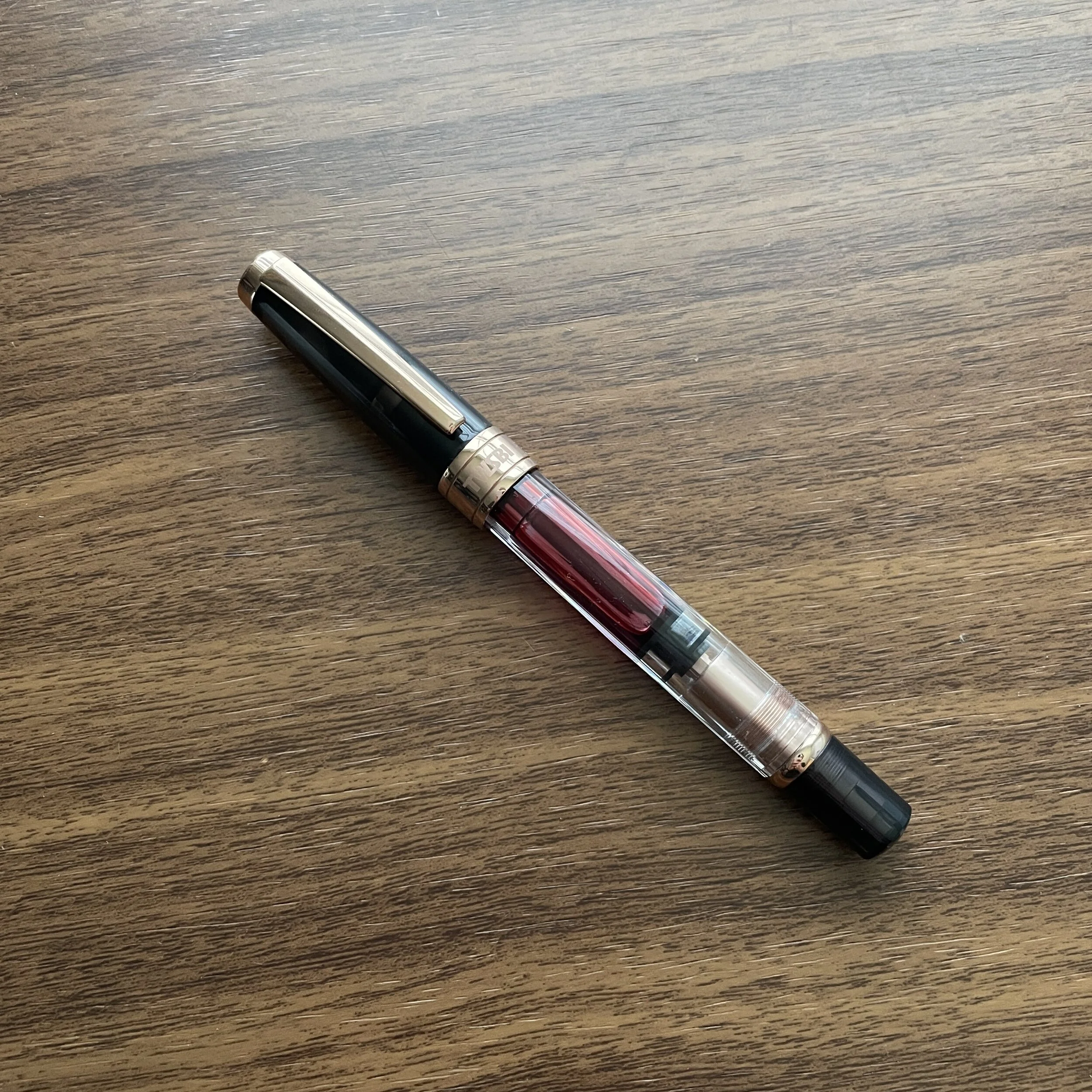
TWSBI 580 Rose Gold
TWSBI 580 Rose Gold
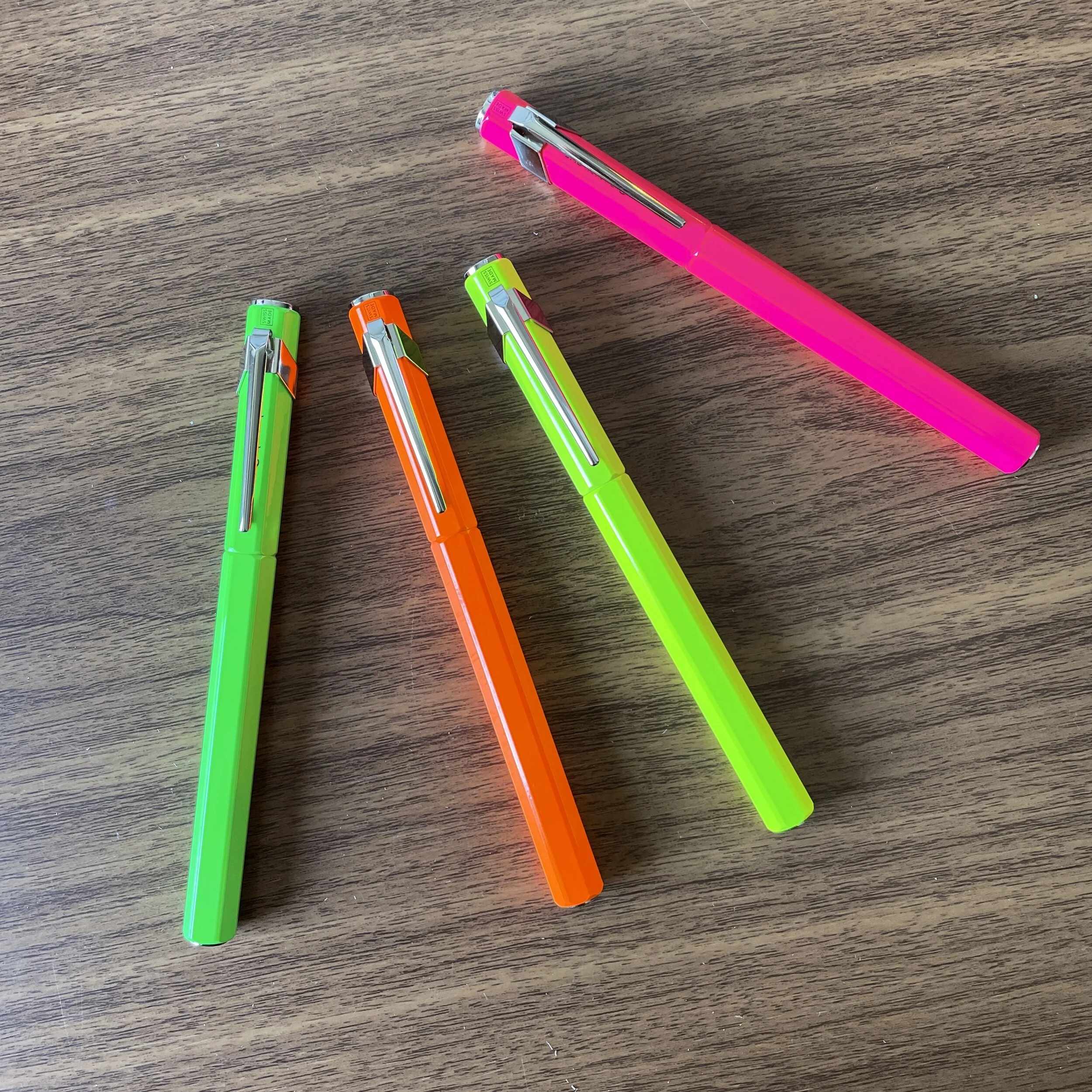
Caran d'Ache 849
Caran d'Ache 849
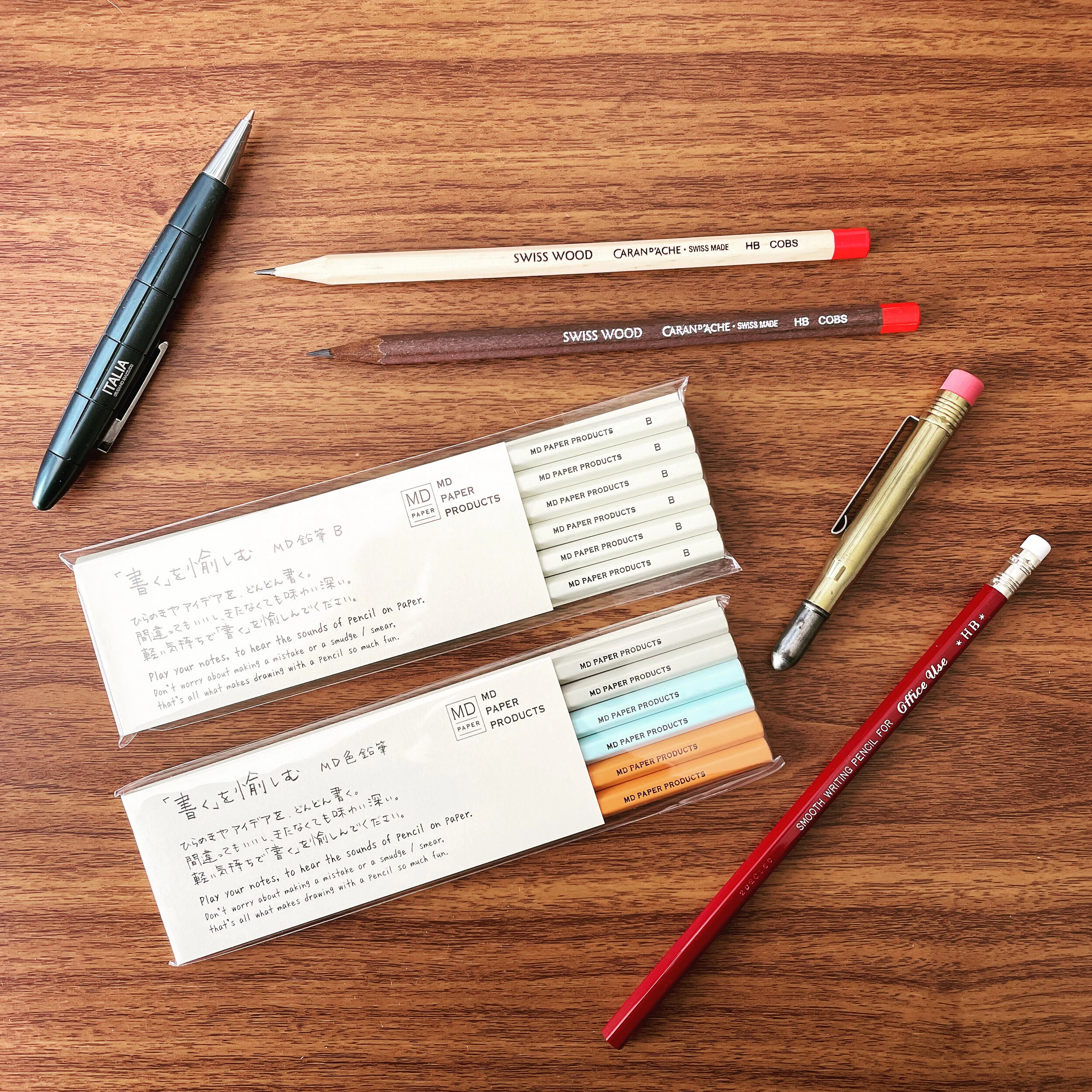
Pencils!
Pencils!

Consider Joining TGS Patreon for Access to Monthly Meetups and More!

You can read more about T.G.S. Patreon here. This year I’ve rolled out some new features in 2021 that will be exclusive to Patreon subscribers, including monthly online meetups, which took place on Friday and was a lot of fun. We discussed our thoughts on pen shows restarting, recent arrivals in our personal collections, and more. I will also continue with periodic “sample sales” of gently used review items, to which Patrons will have first access. The current sale is now live!

In LInks Tags Links
2 Comments

My “Personal Favorites” List got a lot more colorful this year!

It's That Time Again! Updated 2021 "Best Pen" Recommendations Are Live

May 1, 2021

Every year, around this same time, I update the “Best Pen” recommendations to account for new releases, discontinuations, price increases, industry developments, and changes in my own use preferences. For the 2021 update (which coincides with the recent 8th “Bloggiversary” of T.G.S.), I’ve made some fairly significant overhauls to the page, particularly the “Best Fountain Pens Under $100,” “Personal Favorites,” “Pocket Pens,” and “Refillable Rollerballs and Ballpoints.” Here are some highlights:

  • Opus 88 and PenBBS have made appearances as core recommendations in a couple of places. I’ve spent enough time with both brands to feel comfortable recommending them, though with PenBBS I generally shy away from anything other than the cartridge converter, eyedropper, or vacuum fillers, due to reliability issues with the more “experimental” filling systems.

  • The Schon DSGN Pocket Six fountain pen and the Traveler’s Company Brass Pens make appearances on the “Pocket Pens” list. I love both designs and it’s rare that I don’t have one or the other inked up and in rotation at any given time.

  • I’ve completely reworked my “Personal Favorites” list, which swaps out the Leonardo Momento Zero Grande for the standard Momento Zero, adds the Kanilea Pen Co. “Classic Flush” design, and brings back the Pilot Custom 823.

You can read the rest of this year’s “Best Pens” lists here, and as always, I’ve left the lists from the past several years live so that you can see how my tastes and recommendations have evolved over time. Enjoy!

In Editorial Tags Best Pens 2021, Top 5, Editorial
3 Comments
Pilot-Iroshizuku-Overview-Part-II.jpeg

Workhorse Inks: Exploring Iroshizuku, Part II (Asa-Gao, Murasaki-Shikibu, and Aji-Sai)

April 28, 2021

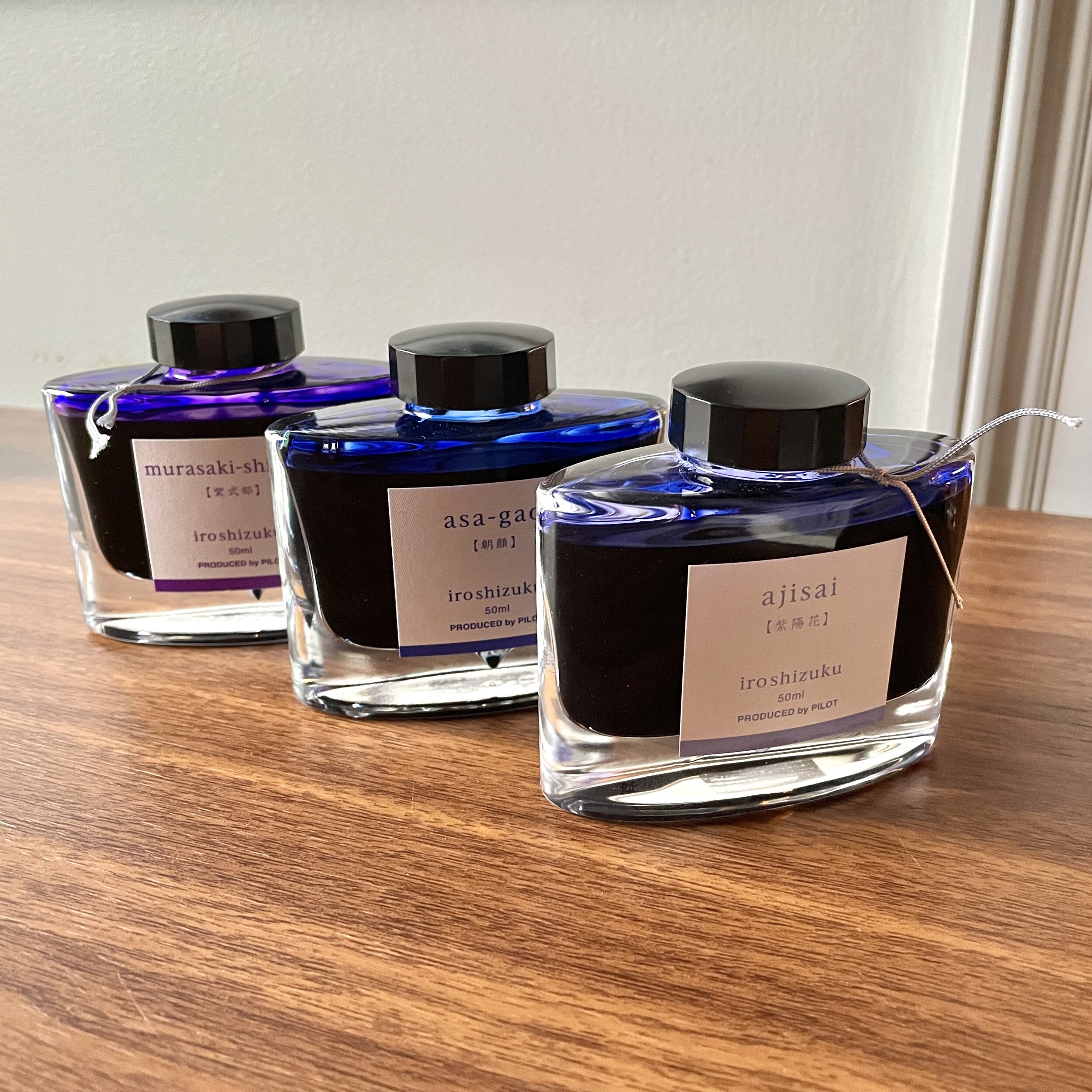
Today I’ll delve further into Pilot’s Iroshizuku line, looking at three more inks from Pilot’s luxury ink brand. One of these, Asa-Gao (“Morning Glory”), has served as a core blue ink for me over the years, while the other two are inks with which I have relatively little experience: Muraskai-Shikibu (“Japanese Beautyberry”) and Ajisai (“Hydrangea”). All three are in the blue-purple family, with Asa-Gao being the most blue, Murasaki-Shikibu the most purple, and Ajisai a hybrid of the two.

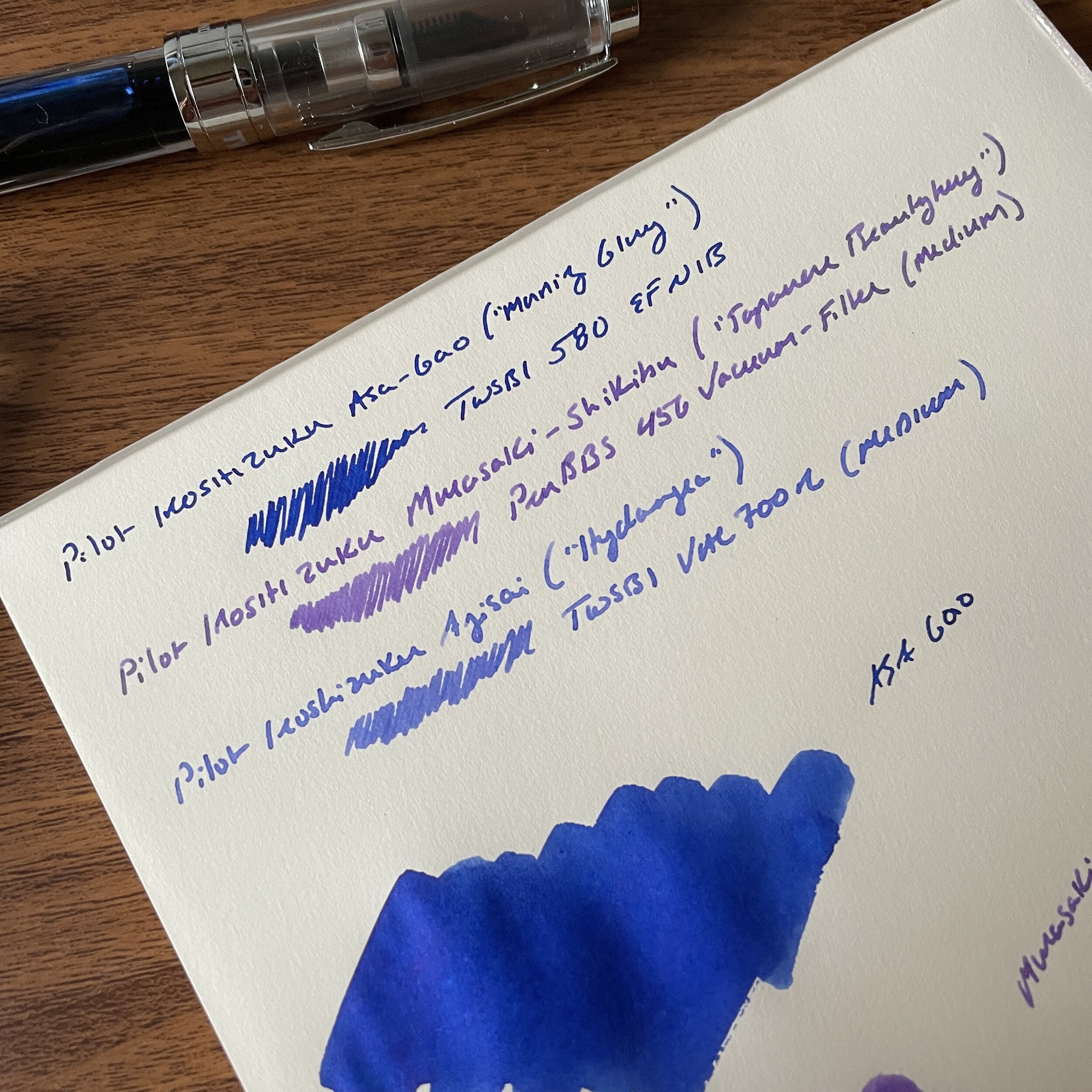
Three writing samples compared, top to bottom: Asa-Gao, Murasaki-Shikibu, and Ajisai. All writing samples are done on Midori MD Cotton paper, which is now back in stock in The Curated Shop! Pens used for writing samples include a TWSBI Diamond 580 (…

Three writing samples compared, top to bottom: Asa-Gao, Murasaki-Shikibu, and Ajisai. All writing samples are done on Midori MD Cotton paper, which is now back in stock in The Curated Shop! Pens used for writing samples include a TWSBI Diamond 580 (Asa-Gao), a PenBBS 456 Vacuum Filler (Murasaki-Shikibu), and a TWSBI Vac 700R Iris (Ajisai).

Asa-Gao (“Morning Glory”)

I’m not particularly subjective here: Iroshizuku Asa-Gao is one of my favorite inks of all time. A rich royal blue that sometimes shows just the slightest hint of purple, it’s the ultimate workhorse ink because it’s not only gorgeous, but a well-behaved, non-distracting color that will look just as good in your journal as it does in the office. I’ve also found Asa-Gao less likely to take on that faded, washed-out look that some basic blue inks adopt as they dry. Though I haven’t made my way though the entire lineup yet, I can’t imagine liking any two Iroshizuku inks better than Asa-Gao and Yama-Budo.

Iroshizuku Asa-Gao: A “safe” blue ink that really pops.

Iroshizuku Asa-Gao: A “safe” blue ink that really pops.

Murasaki-Shikibu (“Japanese Beautyberry”)

The next two inks, Murasaki Shikibu and Ajisai, fall into the category of inks that I’m probably less likely to use on a regular basis, but are still excellent choices if you like the colors and appreciate shading. Murasaki-Shikibu, the “core purple” of the Iroshizuku lineup, offers a less-saturated purple option for those who love purple inks but perhaps don’t love using them in clear demonstrators, where they can be difficult to clean and even have a tendency to stain. (I’m looking at you, Waterman Violet - sorry, “Tender Purple.”)

Ajisai (“Hydrangea”)

Ajisai was a pleasant surprise! Like Murasaki-Shikibu, Ajisai is a softer color that shades nicely. Online reviews and ink swatches unfortunately tend to show Ajisai as much more washed out than the ink actually is. On more absorbent paper, the color is quite legible, to the point where I can see myself using this one regularly. I also have several massive hydrangea bushes in my yard, and can confirm that Pilot absolutely nailed the color match with a blue-purple hydrangea bloom. (Fun fact: Hydrangea blooms are either pink or blue, depending on the pH of your soil, so you can change the look of your garden with additives!)

In certain light, you can almost detect a touch of double-shading (i.e., when the ink shades in more than one color) in Ajisai. The lighter area of this swab shows the slightest hint of purple.

Takeaways and Where to Buy

The deeper I go into the ink line, the more I love Pilot Iroshizuku. Prior to this year, I had never given much thought to Murasaki-Shikibu or Ajisai, and both ended up as inks that I could easily introduce into the regular rotation. One goal of this longer-term project is to evaluate Iroshizuku as a solution for those looking for perhaps not “one ink,” but a single ink brand from which they can select any color and expect consistent performance across the line. So far, so good!

As of 2023, The T.G.S. Curated Ship is able to offer you Pilot pens and inks directly, including the entire Iroshizuku lineup. We currently carry the 50ml bottles of ink, priced at $24.

Further Reading

Check out Part I of this series here, in which I look at Yama-Budo (Crimson Glory Vine), Shin-Ryoku (Forest Green), and Kon-Peki (Deep Cerulean Blue). I have most of the other inks in this series and will be working my way through them as I write my pens dry and need to refill.

The Gentleman Stationer is supported entirely by purchases from the T.G.S. Curated Shop and pledges via the T.G.S. Patreon Program. We no longer participate in third-party affiliate programs.

In Ink Reviews Tags Pilot Ink, Iroshizuku, Inks, Ink Review
1 Comment
← Newer Posts Older Posts →
Check Out Our New Online Shop!
Store Hours and Events
Updated 2026 "Best Pens" Guide
No results found
On The Paper Trail: Live In Nashville Event Tickets Now Available!
TGS_25 Roterfaden Restock Notification
Hierarchies of Fountain Pen Friendly Paper

Join Our Patreon!
Subscribe to the TGS E-mail List

Featured Posts

Featured
10-Fountain-Pens-Favorite-Inks
August 22, 2026
Three Keeper Inks: Choosing Inks for 10 Fountain Pens
August 22, 2026
Read more →
August 22, 2026
Everyday-Stationery-Bags
July 25, 2026
What's the Best Everyday Stationery Bag? My Own Considerations and 5 Options for Pen Show Season
July 25, 2026
Read more →
July 25, 2026
Graphilo-Kobeha-Paper.jpg
July 11, 2026
Paper Review: Graphilo by Kobeha
July 11, 2026
Read more →
July 11, 2026
The Gentleman Stationer RSS

© Digital Divide Media, LLC, 2014-present.

All content is the exclusive property of Digital Divide Media, LLC, d/b/a The Gentleman Stationer, including “The Gentleman Stationer” website and trademark, and should not be reproduced without express written permission.  All rights reserved.

All content containing paid advertising, affiliate links, or sponsored content will be plainly disclosed by a disclaimer when/if featured.

Contact Information

Website Terms and Conditions

Privacy Policy and Cookie Policy

Accessibility Statement

Legacy Account Login

Powered by Squarespace